Water damage can occur unexpectedly and spread rapidly throughout a property, particularly when it originates from hidden plumbing inside ceilings, walls, or floor cavities. A cracked or leaking pipe can release water for hours before it becomes visible, allowing moisture to soak into drywall, insulation, flooring, and structural materials. If not addressed quickly, this type of hidden leak can lead to widespread property damage, unpleasant odors, and even mold growth. Prompt source control, extraction, and drying can reduce additional material damage. Structural, plumbing, electrical, and other specialist concerns require the appropriate professional.
In this project, the team at Water Pro Inc responded to a basement water damage situation caused by cracked plumbing pipes located above the ceiling. Technicians used thermal imaging to identify temperature anomalies for further investigation and moisture meters to document conditions at accessible measurement points. After identifying the source of the leak, the team began the emergency water damage restoration process by accessing the affected areas, removing trapped moisture, and installing specialized drying equipment. The team monitored documented material and environmental readings, adjusted drying equipment, and recorded progress toward the project's drying goals.
Identifying the Source of the Leak
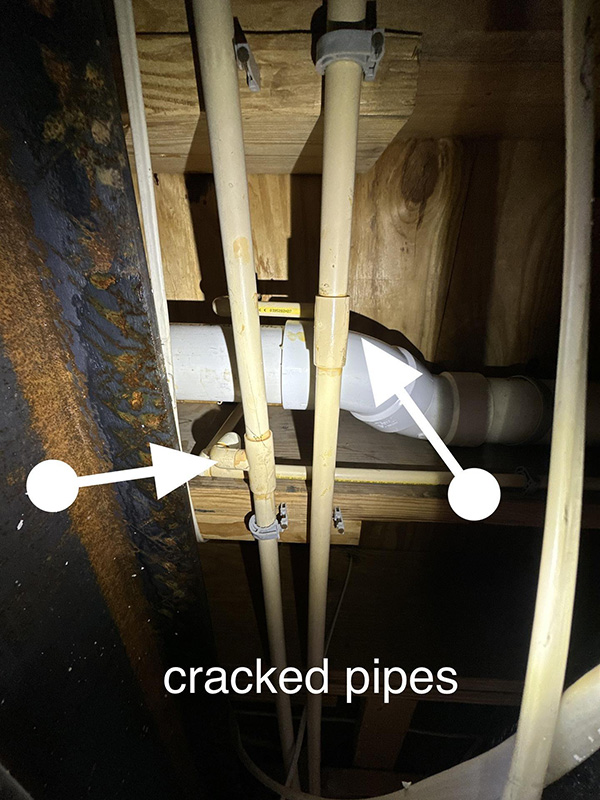
The first step in any water damage restoration project is identifying the exact source of the leak. In this case, technicians traced the moisture back to plumbing lines located in the ceiling cavity above the basement. Several plastic pipes had developed cracks, allowing water to slowly leak and spread throughout the ceiling structure.
Once the ceiling was opened, the team was able to inspect the plumbing system directly and confirm the damaged sections of pipe. Locating the exact failure point is essential before any restoration work begins, as the water source must be repaired to prevent continued damage.
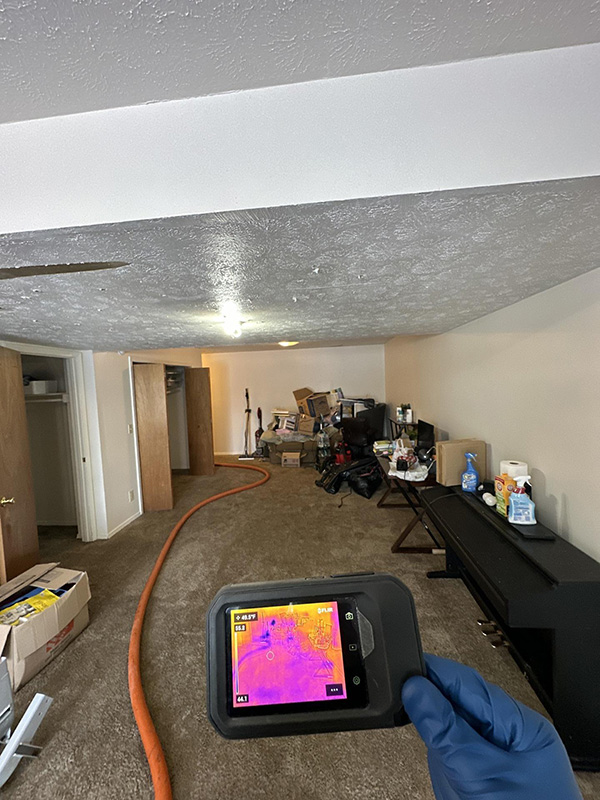
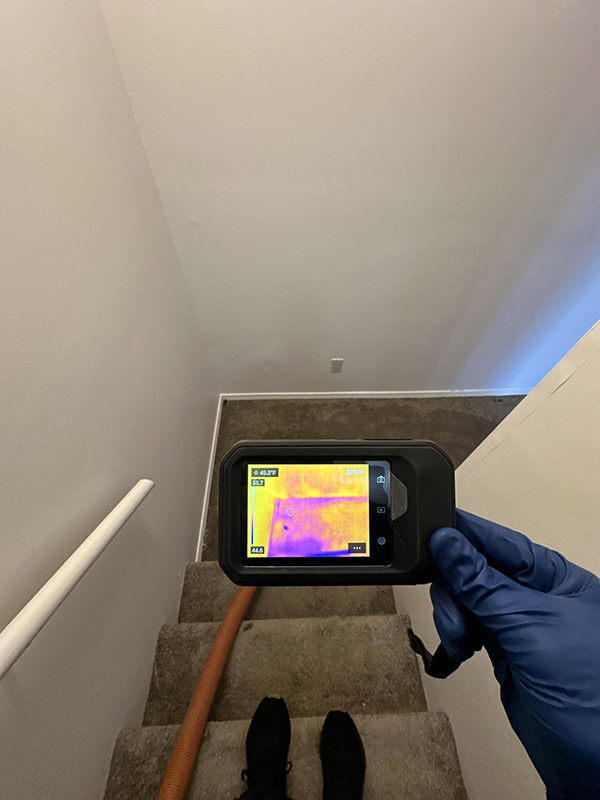
Inspecting Hidden Moisture with Thermal Imaging
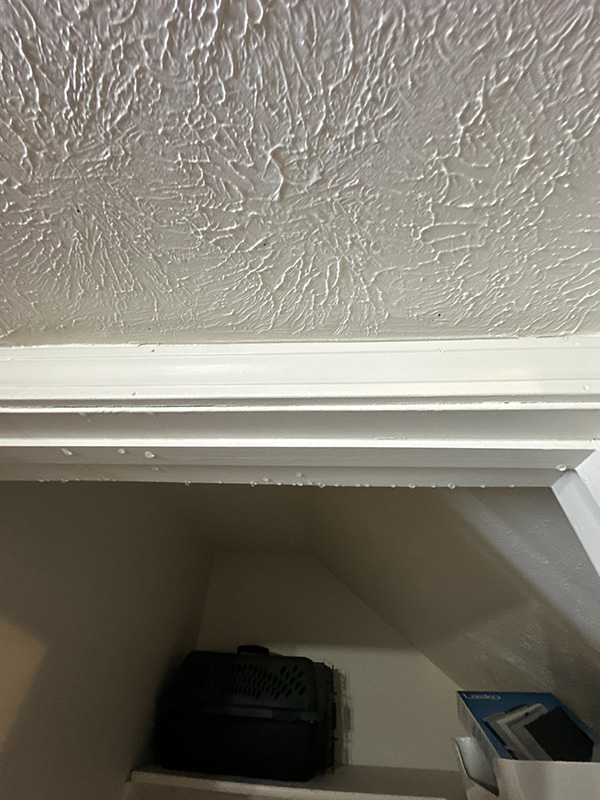
Water damage often spreads far beyond what is visible on the surface. To detect hidden moisture inside walls, ceilings, and flooring, the restoration team used thermal imaging technology. These cameras highlight temperature differences that reveal areas where moisture may be trapped behind materials.
The thermal images allowed technicians to map the affected areas and determine how far the water had traveled through the basement. By combining thermal imaging with moisture meters, they could accurately plan the drying process and target the areas that required the most attention.
Opening the Ceiling to Release Trapped Moisture
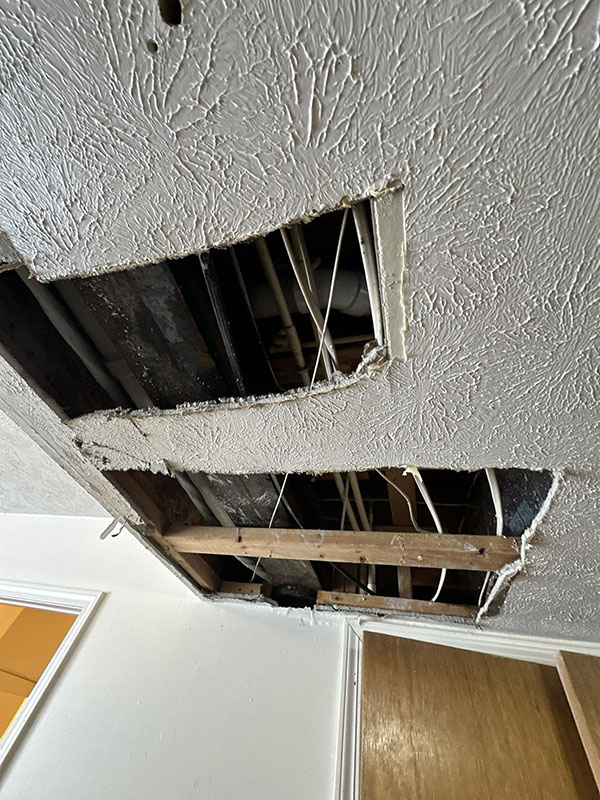
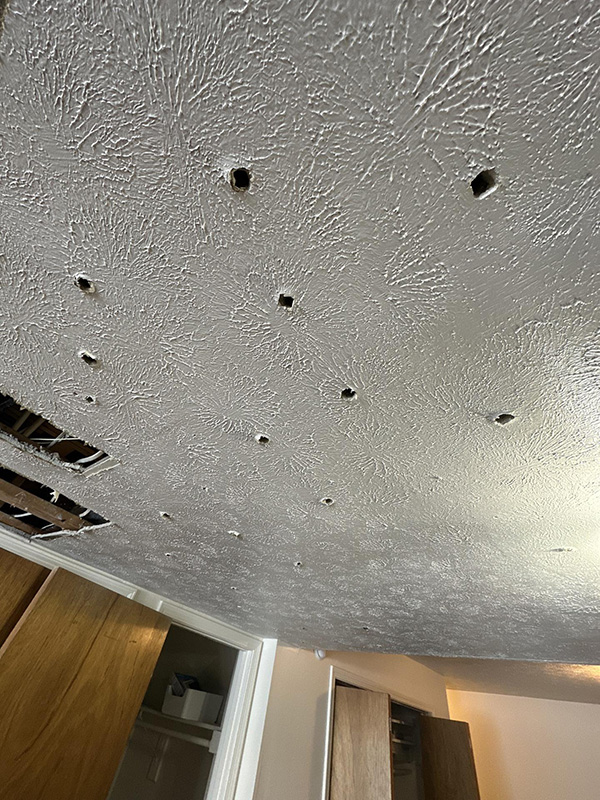
When water enters a ceiling cavity, it can become trapped between drywall and structural framing. To prevent mold growth and structural deterioration, technicians opened sections of the ceiling to allow air circulation inside the cavity.
Small ventilation holes were drilled across the ceiling surface to release moisture and promote airflow during the drying process. In some areas, larger sections of drywall were removed to access the plumbing and allow the structure to dry properly.
Measuring Moisture in Carpets and Flooring
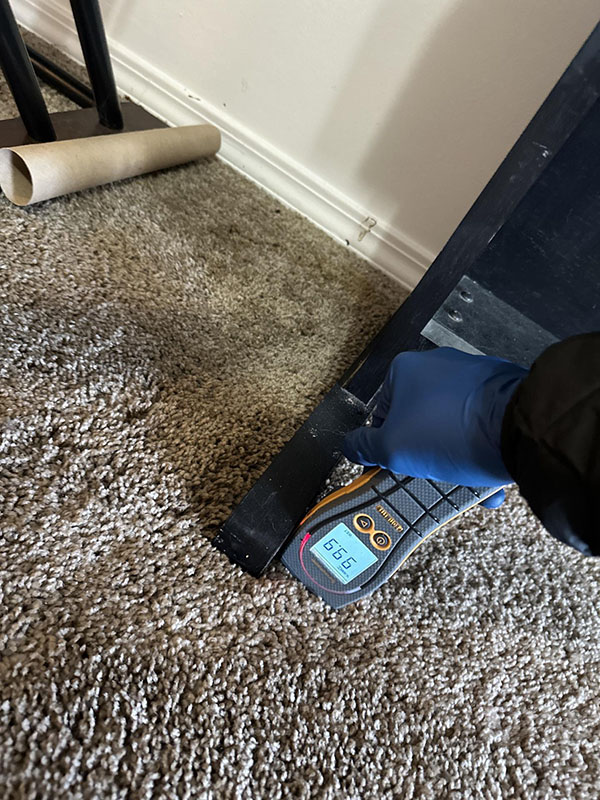
Water from the ceiling eventually made its way to the basement floor, soaking into the carpet and padding. To determine the severity of the damage, technicians used professional moisture meters to measure the amount of water present in the flooring materials.
The readings confirmed that the carpet and padding had absorbed a significant amount of moisture. In situations like this, the padding beneath the carpet is usually removed because it retains water and can quickly develop mold or odors if left untreated.
Removing Damaged Materials and Preparing the Area
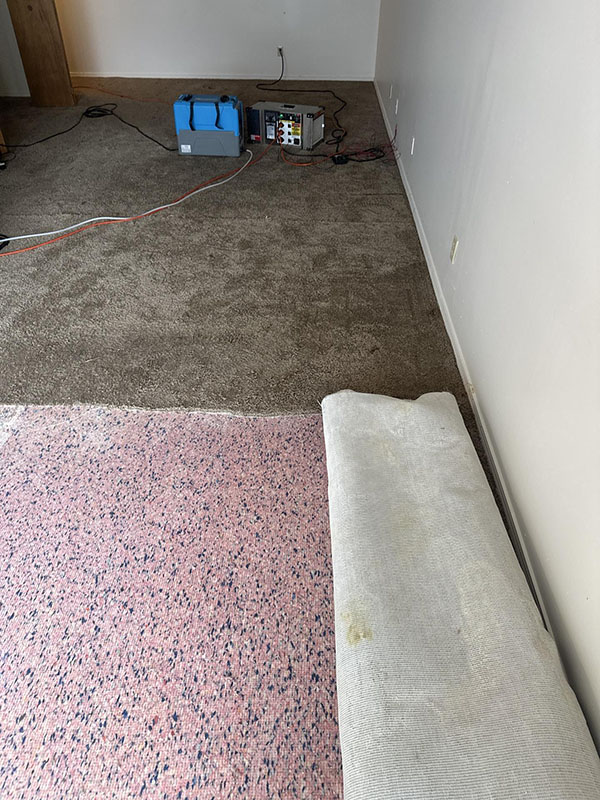
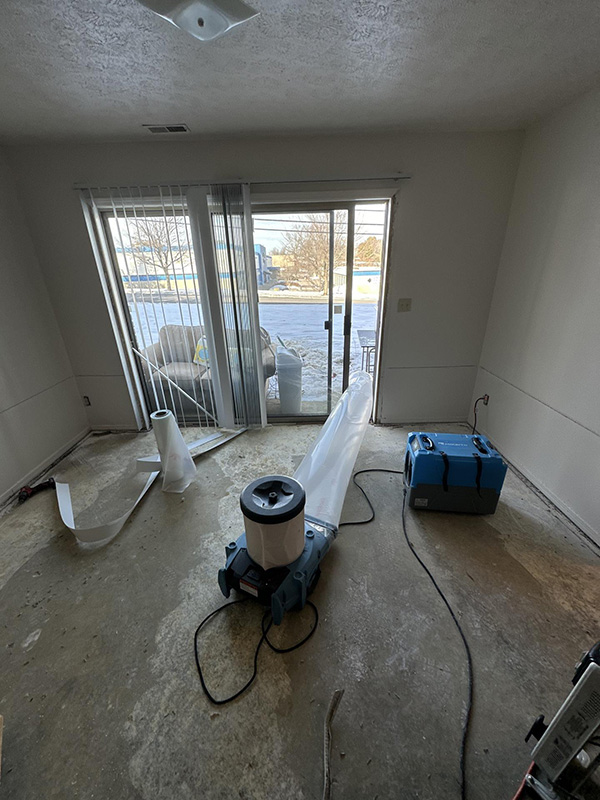
Once the moisture levels were assessed, the restoration team began removing materials that could not be effectively dried. Water-damaged carpet padding was carefully lifted, and in some areas the carpet itself was rolled back to expose the subfloor beneath. Carpet padding is highly absorbent and tends to retain moisture for long periods, making it difficult to fully dry once saturated. Removing the included flooring materials allowed inspection and measurements in newly accessible areas beneath the flooring.
Opening up the flooring also allows air to circulate more freely around the affected areas, significantly improving the efficiency of the drying process. With the subfloor exposed, restoration equipment such as air movers and dehumidifiers can directly target the damp structural materials. During this stage, professionals also evaluate the property for any early signs of microbial growth. If moisture has been present for an extended period, mold inspection and remediation may be necessary to identify and remove any developing mold colonies.
Installing Professional Drying Equipment
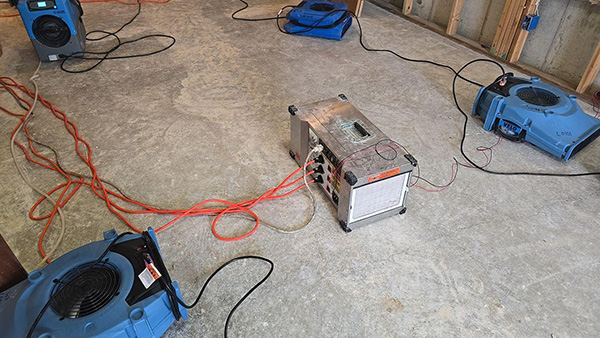
With the damaged materials removed and the structure exposed, the restoration team installed specialized drying equipment throughout the basement. High-velocity air movers were positioned to circulate air across wet surfaces, helping moisture evaporate from the structure.
Dehumidifiers and air-filtration equipment were set up based on the conditions found. Technicians monitored environmental and material readings over several days and adjusted equipment as the documented areas progressed toward the project's drying goals.
Conclusion
Hidden plumbing leaks can cause serious damage before they become visible, especially when pipes run through ceilings or wall cavities. In this case, a cracked pipe allowed water to spread through the basement ceiling and flooring, affecting multiple materials within the space.
Water Pro documented the apparent source, removed materials included in the agreed scope, and used professional drying equipment. Acting quickly can reduce additional material damage and the opportunity for mold growth; the final record should identify the readings, areas evaluated, and remaining limitations.