Introduction
When it comes to mold, what you can’t see can hurt you. Hidden beneath homes in dark, damp crawlspaces, mold thrives silently until it becomes a major issue. At Water Pro Inc., we recently responded to a call from a homeowner who noticed a persistent musty smell inside their home. What followed was a thorough crawlspace mold remediation project that highlights the importance of early detection and professional intervention.
Crawlspaces are particularly vulnerable to moisture buildup due to poor ventilation or minor leaks that go unnoticed. Over time, this excess moisture creates the perfect environment for mold to grow and spread. Moisture and visible growth in a crawlspace can affect building materials and warrant further assessment. Water Pro documents observable building conditions; health concerns belong with a qualified healthcare professional. That’s why our team treats every job, big or small, with the same level of attention and care.
In this post, we walk you through a recent residential crawlspace mold removal project. While this job was residential in nature, many of the tools, products, and processes we use here are the same ones we rely on for larger-scale Commercial Water Damage Restoration or even commercial carpet cleaning jobs. The standards remain high, no matter the setting.
Preparing the Site for Cleanup
When the homeowner first contacted Water Pro Inc., they described a persistent musty smell that had been lingering inside the house for several weeks. Concerned about potential health risks and structural damage, they requested a full inspection. Our team arrived promptly and conducted a thorough assessment of the property. It didn’t take long to pinpoint the issue: extensive mold growth had taken hold throughout the crawlspace. Due to the severity of the contamination and the confined nature of the area, this project required a full-scale remediation effort. Our technicians prepared equipment, PPE, and work-area controls for the remediation activities included in the documented scope.
Safe Removal of Damaged Materials
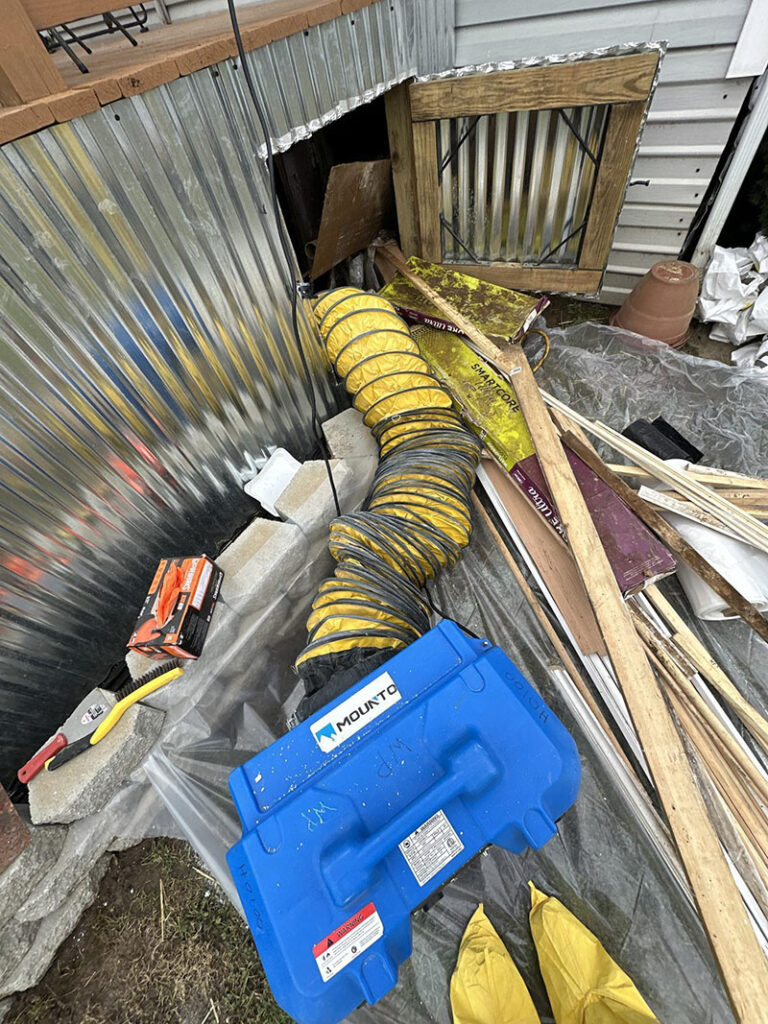
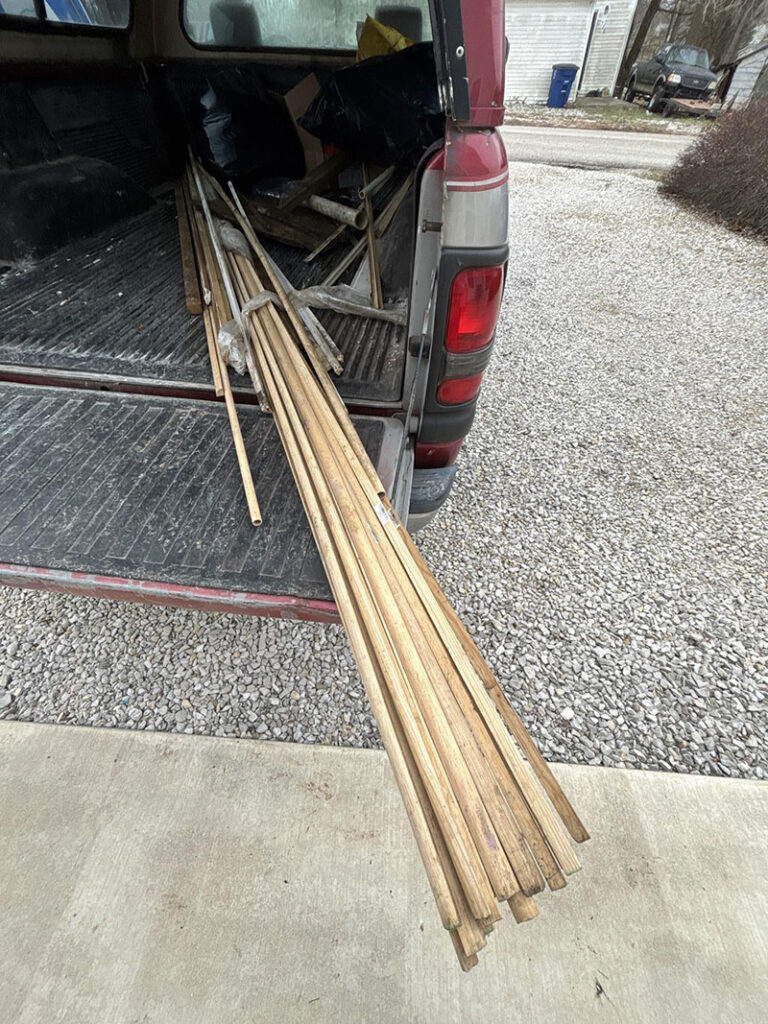
We began by carefully preparing the worksite to ensure a controlled and safe environment for remediation. All damaged materials, including saturated wood and mold-contaminated insulation, had to be removed from the crawlspace. This process required precision and care, as disturbing these materials too quickly could release harmful spores into the air. Our crew used the appropriate tools and protective gear to handle the debris without cross-contaminating unaffected areas. Technicians documented the accessible crawlspace areas included in the project and identified observed materials that required cleaning, removal, or further evaluation.
Gearing Up for Safety
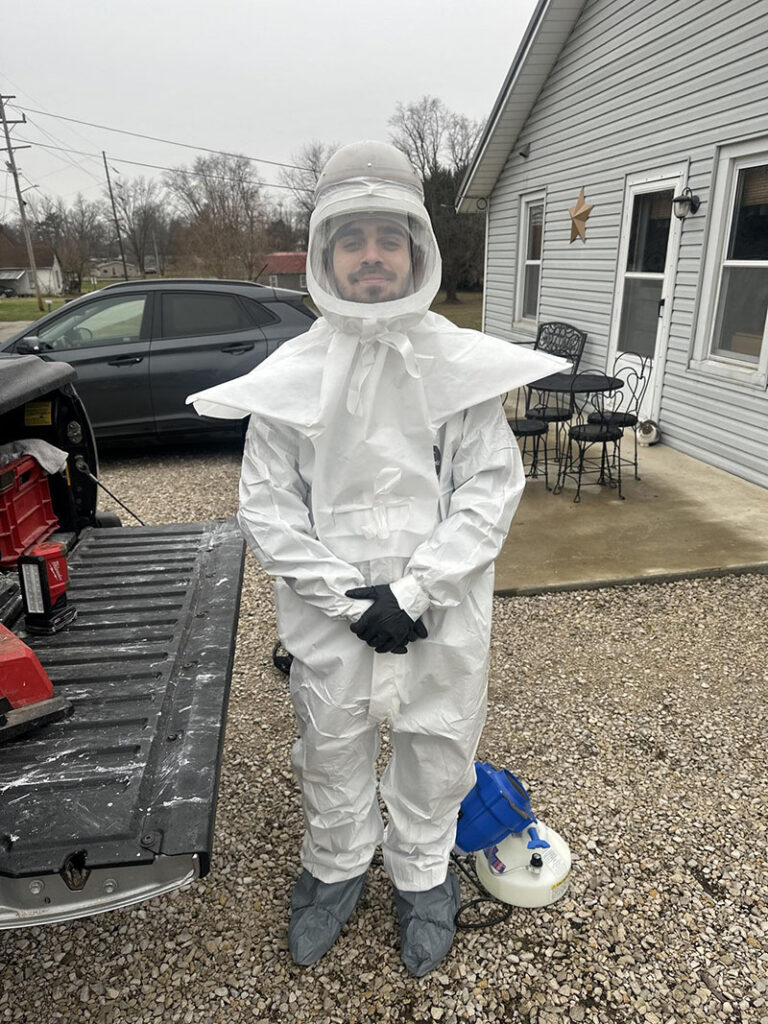
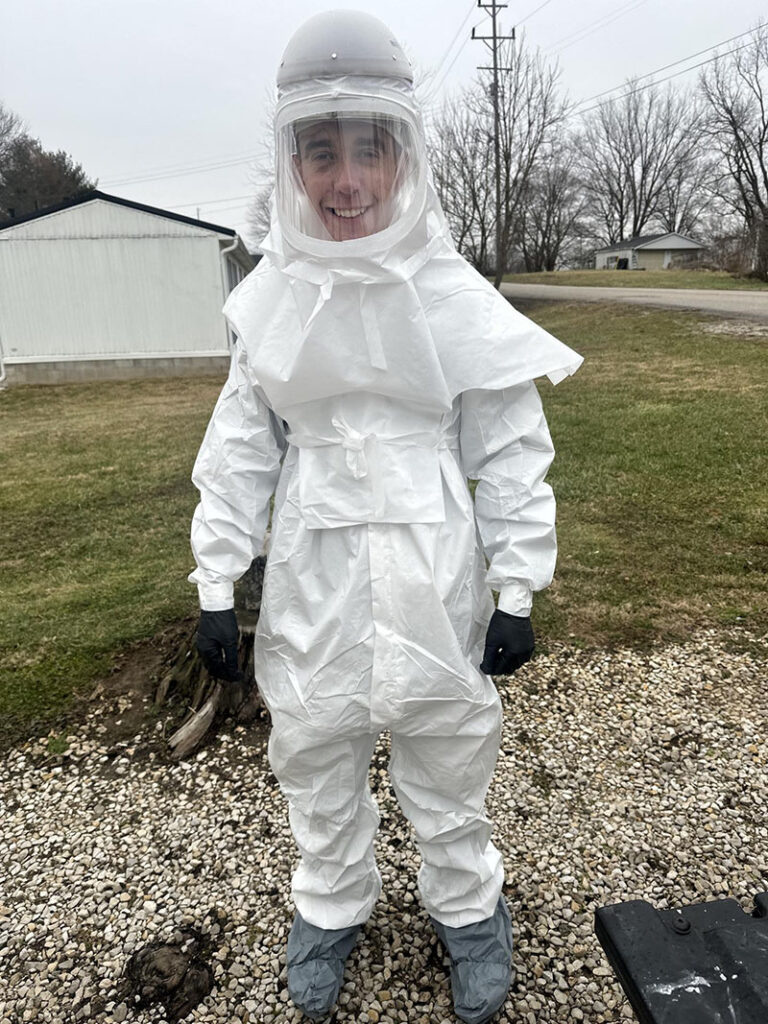
Our crew suited up in full personal protective equipment (PPE) before stepping into the crawlspace. The crew used project-selected PPE, including respirators, protective suits, gloves, and footwear protection, as part of the work plan. Mold spores can pose significant health risks, particularly in confined and poorly ventilated spaces like crawlspaces, where exposure can be prolonged. At Water Pro Inc., we prioritize safety on every job, and that means never cutting corners when it comes to protection. The team used the PPE and work-area procedures selected for the project to help control exposure and material migration.
Teamwork in Tight Spaces
Despite the serious nature of the job, our team brought positive energy and a can-do attitude to the site each day. Mold remediation, especially in confined and difficult spaces like crawlspaces, can be physically demanding and mentally taxing. However, we believe that professionalism and morale go hand in hand. A strong team dynamic and good communication help keep the workflow efficient and focused, even during multi-day projects. Our technicians support one another, check in regularly, and maintain a respectful, solution-oriented approach from start to finish. That mindset not only boosts team performance but also reassures the homeowner that the job is in capable hands.
Visible Mold Damage Underneath
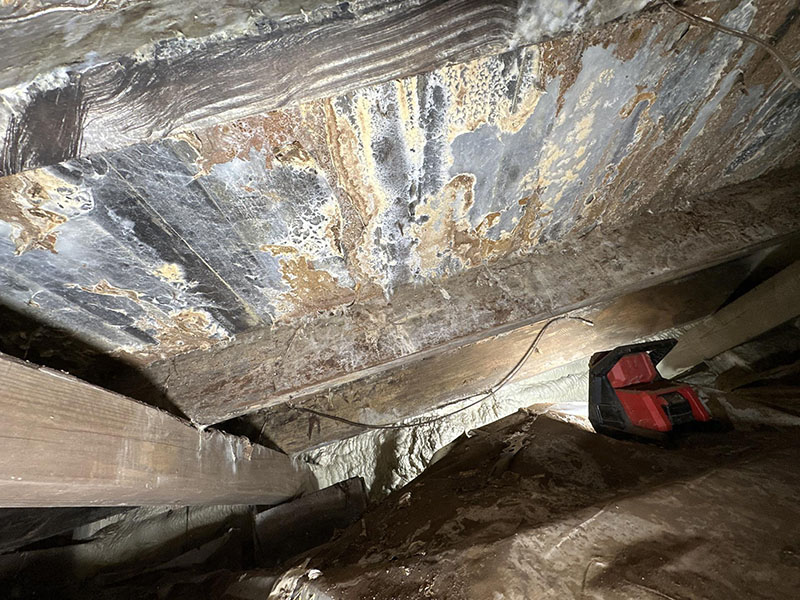
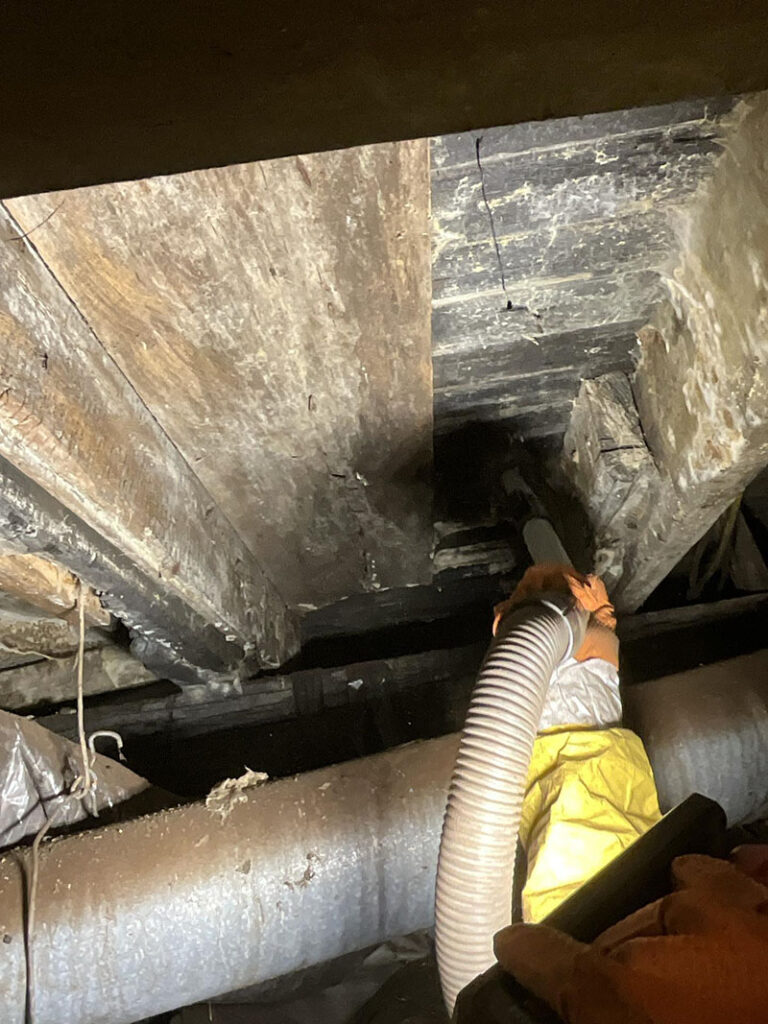
Inside the crawlspace, we found significant mold growth covering the wooden joists and subflooring. The mold had spread across large areas, thriving in the damp, stagnant air where moisture had gone unchecked for months, possibly even years. This type of contamination is a clear indicator of prolonged moisture exposure, often caused by poor ventilation, minor plumbing leaks, or groundwater seepage. Left unaddressed, mold like this can compromise structural integrity and pose serious health risks to occupants. It’s a reminder of why preventative maintenance is so important, not just in homes, but also in commercial properties where water damage can lead to similar challenges.
Assessing the Extent of Contamination
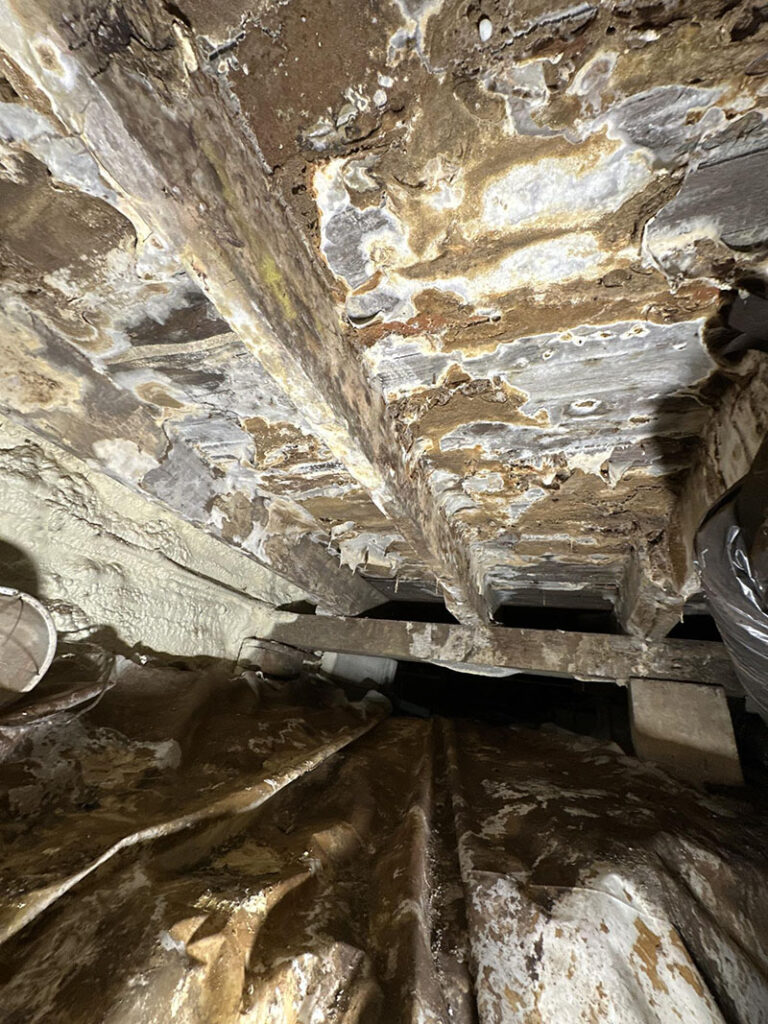
Our technicians documented the extent of the damage before beginning removal. The documented scope used physical cleaning and a project-selected product on the included surfaces. Products were used according to their labels, and the work record should identify the areas treated.
Manual Mold Removal Begins
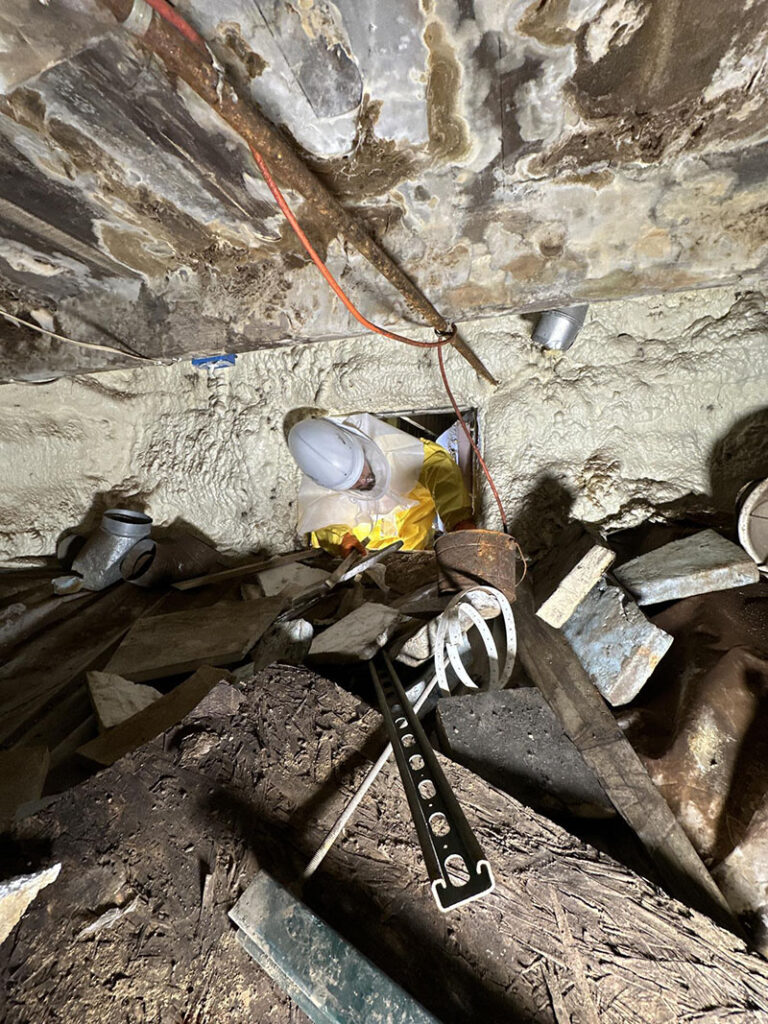
Air-filtration devices and HEPA-filtered vacuums were used as part of the work-area controls while technicians physically cleaned accessible affected surfaces within the documented scope. Physical removal and cleaning are central to remediation; applying a chemical alone is not a substitute. The project record should identify the areas treated and any inaccessible areas or remaining limitations.
Moisture: The Root of the Problem
Water buildup in crawlspaces is a common trigger for mold, especially when ventilation is limited and moisture is allowed to linger. While this particular job wasn’t caused by flooding, the underlying issue (persistent dampness) mirrors many of the scenarios we encounter in other settings. In fact, a large number of commercial water damage restoration calls we receive involve similar conditions in basements, utility rooms, and storage areas of commercial properties. Moisture might enter slowly through cracks or plumbing leaks, but if left unchecked, the result is often the same: mold growth and structural risk.
Final Treatment and Disinfection
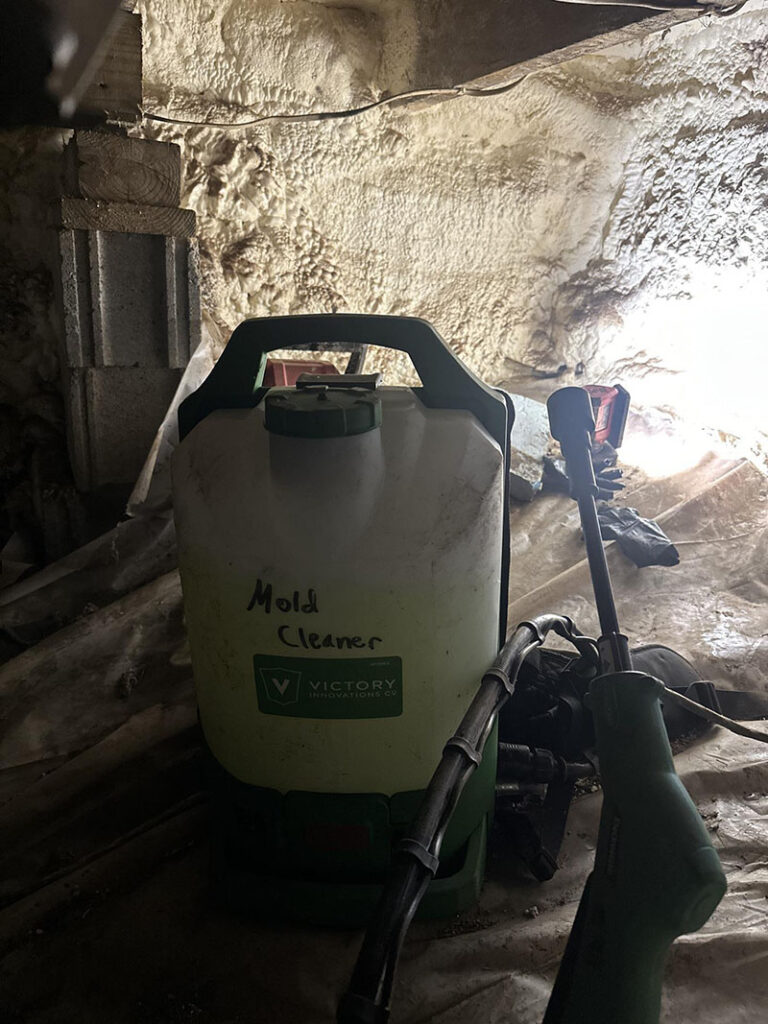
A project-appropriate cleaning product was applied to the surfaces included in the documented scope and used according to its label. Cleaning and moisture correction reduce the opportunity for regrowth, but no product guarantees that mold cannot return if moisture conditions recur.
A Clean, Dry Finish
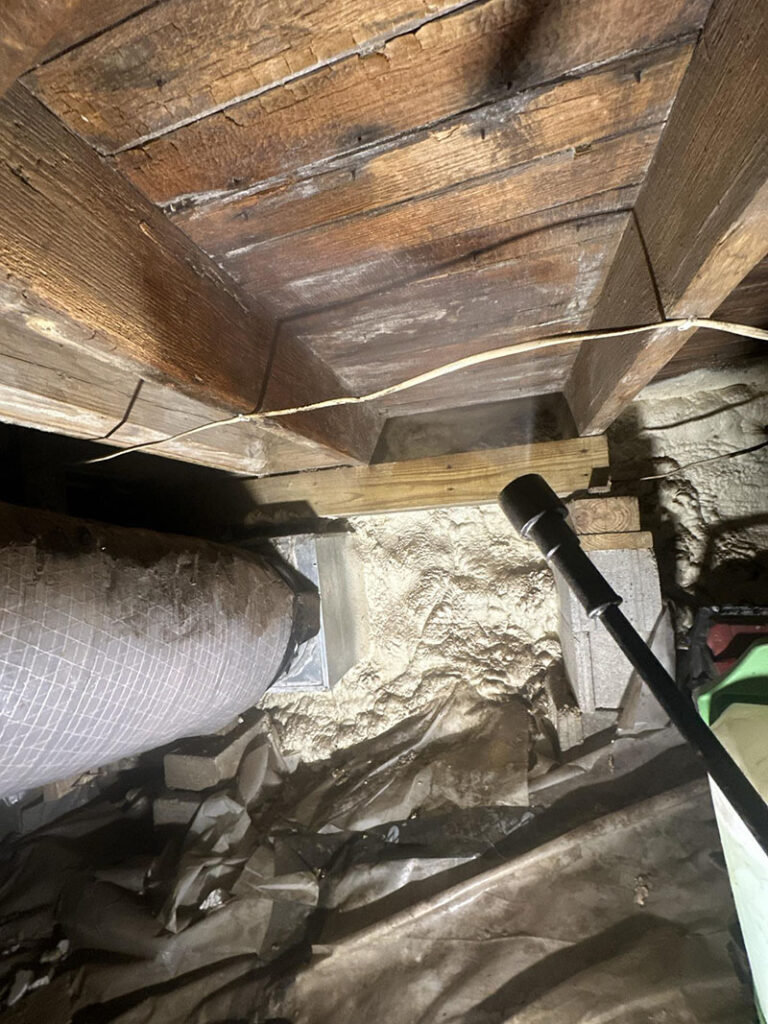
At completion, Water Pro documented the materials removed, accessible surfaces cleaned, treatments applied, moisture work performed, and remaining limitations within the project scope. When post-remediation sampling or verification is requested, it is performed by an independent assessor. The project record should not claim a health outcome, restored air quality, zero spores, or protection from future growth unless separate evidence supports that specific statement.
Conclusion
Persistent crawlspace moisture can affect building materials and warrant further assessment. Water Pro provides mold remediation and moisture-control work within an assessed and agreed scope, with documentation of work performed and remaining limitations. Water Pro also provides commercial carpet cleaning, with methods and products selected for the material, condition, and agreed service.